Most roofing websites treat service pages as an afterthought. They slap up a paragraph or two about roof repairs, add a stock photo, and call it done. Then they wonder why the phone never rings.
The reality is quite different. Your service pages are the heavy lifters of your website. They are the specific location where homeowners decide whether to call you or hit the back button to choose a competitor.
We have analyzed hundreds of roofing websites to track which layouts generate the most leads. Our findings identify a service page structure that consistently outperforms generic layouts by three times or more. This template is not theory. It is based on real conversion data from roofing companies across the United States.
The Anatomy of a High-Converting Roofing Service Page
Every high-performing roofing service page follows the same fundamental structure. The order matters because it mirrors the psychological decision-making process homeowners go through when choosing a contractor.
Homeowners need to feel understood before they feel comfortable hiring you. We have found that structuring the page to answer their subconscious questions in a specific sequence builds the necessary trust.
Start With a Headline That Speaks to the Homeowner’s Problem
Your headline is the single most important element on the page. Generic headlines like “Roof Repair Services” tell the visitor nothing about why they should choose you. Statistics from advertising legends suggest that five times as many people read the headline as read the body copy.
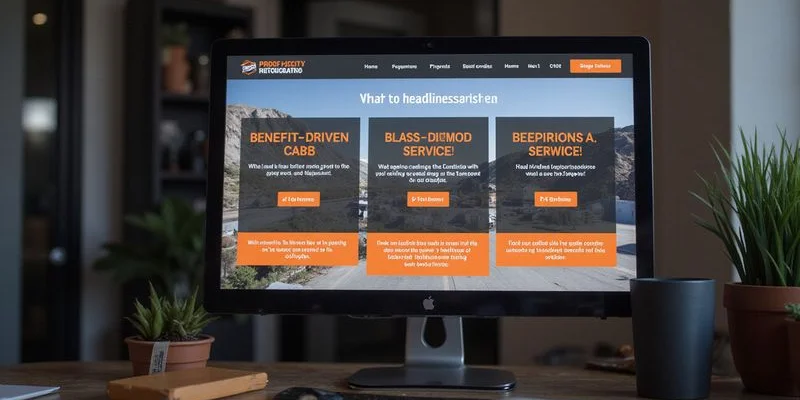
Use a formula that combines the service with a benefit or addresses a pain point directly. Strong headline formulas for roofing service pages include patterns like “City + Service + Benefit” or “Problem + Solution + Timeframe.”
Effective Headline Formulas:
| Formula Type | Template | Example |
|---|---|---|
| Speed & Location | [Service] in [City] - [Time Benefit] | “Roof Leak Repair in Dallas - Same Day Response” |
| Trust & Guarantee | [Service] - [Guarantee/Warranty] | “Full Roof Replacement - 50-Year Warranty Included” |
| Problem Solver | Fix [Problem] with [Service] | “Stop Leaks Fast with Expert Storm Damage Repair” |
For example, “Fast Roof Leak Repair in Dallas - Same Day Response, Guaranteed” immediately tells the visitor what you do, where you do it, and why you are the right choice.
The Trust Bar Immediately Below the Headline
Right under your headline, place a horizontal bar containing your most important trust signals. This needs to happen immediately because credibility is the primary hurdle in the roofing industry.
This section should include your years in business, number of completed projects, license number, and major certifications. Specific manufacturer badges carry weight here. Mentioning your status as a GAF Master Elite contractor or an Owens Corning Platinum Preferred installer signals distinct quality.
Homeowners scanning your page need to see these credibility signals within the first few seconds. If they have to scroll to find out whether you are licensed and insured, many will leave before they get there.
A Clear Value Proposition Section
Below the trust bar, dedicate a section to explaining what makes your approach to this specific service different. Do not talk about your company history here. Focus entirely on what the homeowner gets.
Address their biggest concerns directly. For roof replacement pages, that means talking about timeline, warranty coverage, cleanup process, and financing options like GreenSky or Hearth.
This section should include three to four short paragraphs or a series of icon-based feature blocks. Each one should answer a question the homeowner is already asking in their head.
CTA Placement Strategy That Drives Action
One of the biggest mistakes roofing companies make is putting a single call-to-action (CTA) at the bottom of the page. By the time most visitors reach the bottom, they have already made their decision or clicked away.
We recommend a multi-point CTA strategy. You need multiple CTAs placed strategically throughout the page to catch users at different stages of intent.
- The “Above the Fold” CTA: Place your first CTA immediately after the value proposition section. This catches visitors who are ready to act and do not need more convincing.
- The “Mid-Funnel” CTA: Use a second CTA after your process explanation or before-and-after gallery.
- The “Anchor” CTA: Place a final, more prominent CTA at the bottom of the page for visitors who read everything before deciding.
HubSpot research indicates that personalized CTAs can perform 202% better than basic versions. Each CTA should use action-oriented language specific to the service. Instead of “Contact Us,” use “Get Your Free Roof Inspection” or “Schedule Your Estimate Today.” The more specific the CTA text, the higher the click-through rate.
Before-and-After Galleries Build Instant Credibility
Nothing sells roofing work better than visual proof. A before-and-after gallery placed in the middle of your service page gives homeowners a clear picture of the quality of your work.
This is especially powerful for services like roof replacement, storm damage repair, and gutter installation where the visual transformation is dramatic. We suggest using tools like CompanyCam to easily capture and embed these timelines directly onto your site.
Each gallery entry should include a brief description of the project scope, the materials used, and the timeline. This adds context that turns a simple photo into a compelling case study. Aim for at least four to six before-and-after pairs per service page.
Testimonials Placed With Purpose
Testimonials should not be confined to a separate reviews page. Embed two to three relevant testimonials directly within your service pages.
The key is relevance. A testimonial about your roof repair work belongs on the roof repair service page, not buried on a generic testimonials page where nobody will find it. A 2024 BrightLocal survey found that 98% of people read online reviews for local businesses.
Place testimonials after sections where the homeowner might have objections. After discussing pricing or process, a testimonial from a satisfied customer can address unspoken doubts and push the visitor closer to picking up the phone.
Process Explanation Reduces Anxiety
Homeowners are often nervous about hiring a roofing contractor. A clear step-by-step process section reduces that anxiety by showing them exactly what to expect.
Number each step and keep the descriptions short. A typical roofing service process section might include:
- Initial Inspection: We perform a 21-point digital analysis of your roof.
- Detailed Estimate: You receive a transparent quote with no hidden fees.
- Material Selection: We help you choose the best shingles for your budget.
- Installation: Our crew completes most jobs in a single day.
- Final Walkthrough: We do not leave until you are 100% satisfied.
This section serves double duty. It reassures the homeowner that you are organized and professional, and it pre-qualifies leads by setting clear expectations about your workflow.
Schema Markup and SEO Considerations
From an SEO perspective, your service pages need proper schema markup to stand out in search results.
Use LocalBusiness and Service schema types (JSON-LD) to help search engines understand exactly what services you offer and where you offer them. This technical code sits in the background but helps Google highlight your page for “near me” searches.
Include FAQs with FAQ schema at the bottom of each service page to capture additional search real estate. Your service page URLs should follow a clean structure. Use descriptive slugs like “/roof-replacement/” rather than “/services/service-1/.” Internal linking between related services strengthens your overall site architecture and helps both visitors and search engines navigate your content.
Putting It All Together
The difference between a roofing service page that converts and one that sits idle comes down to structure and intent. Every element on the page should serve a purpose, whether that is building trust, addressing objections, or guiding the visitor toward taking action.
Follow this template, customize it for each service you offer, and you will see a measurable increase in the number of leads your website generates.
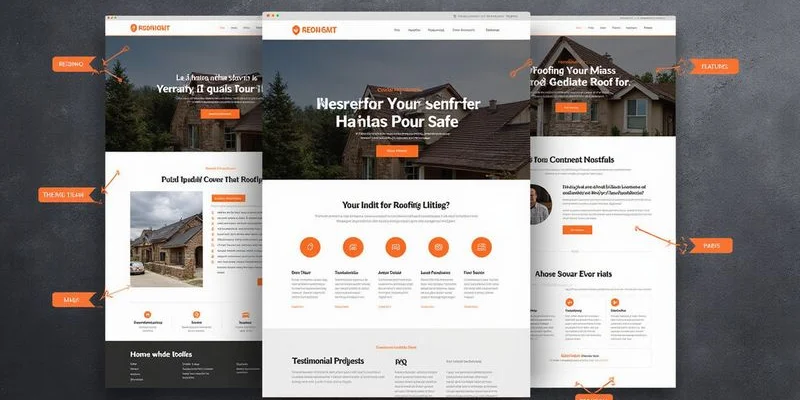
Start with your highest-traffic service page first. Rebuild it using this structure, track the results for thirty days, and then roll out the same template across your remaining service pages.
The compounding effect of optimized service pages across your entire site can transform your roofing website from a digital brochure into a genuine lead generation machine.